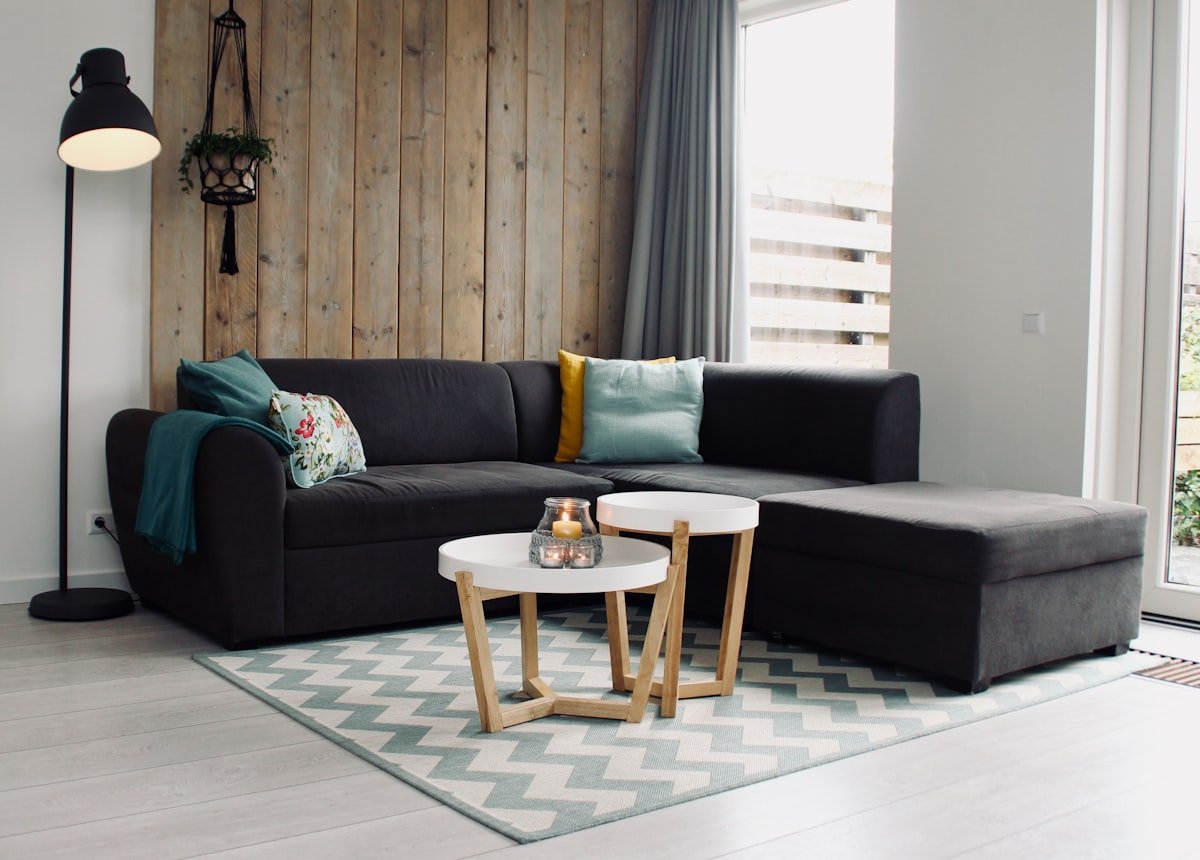
15 Small Living Room Ideas That Make Your Space Feel Twice as Big
My living room is 11 feet by 12 feet. When we moved in, I was sure it was hopeless — the sofa ate one wall, the TV ate another, and the whole room felt like a waiting area. It turns out small living rooms don’t need more square footage; they need a few tricks that change how the space reads. These 15 small living room ideas are the ones that actually worked for me — each with the WHY behind it, because once you understand the why, you can apply it to any room. All renter-friendly, most of them free.
Layout Tricks (Free, and the Most Powerful)
1. Float Your Furniture Off the Walls
Pushing everything flat against the walls feels logical, but it creates a dead doughnut of space in the middle and makes the room read like a doctor’s office. Pull the sofa even 6–10 inches off the wall and angle chairs toward it. Why it works: a little air behind furniture creates depth, and depth reads as space. This one costs nothing and takes fifteen minutes.
2. Go Bigger With the Rug
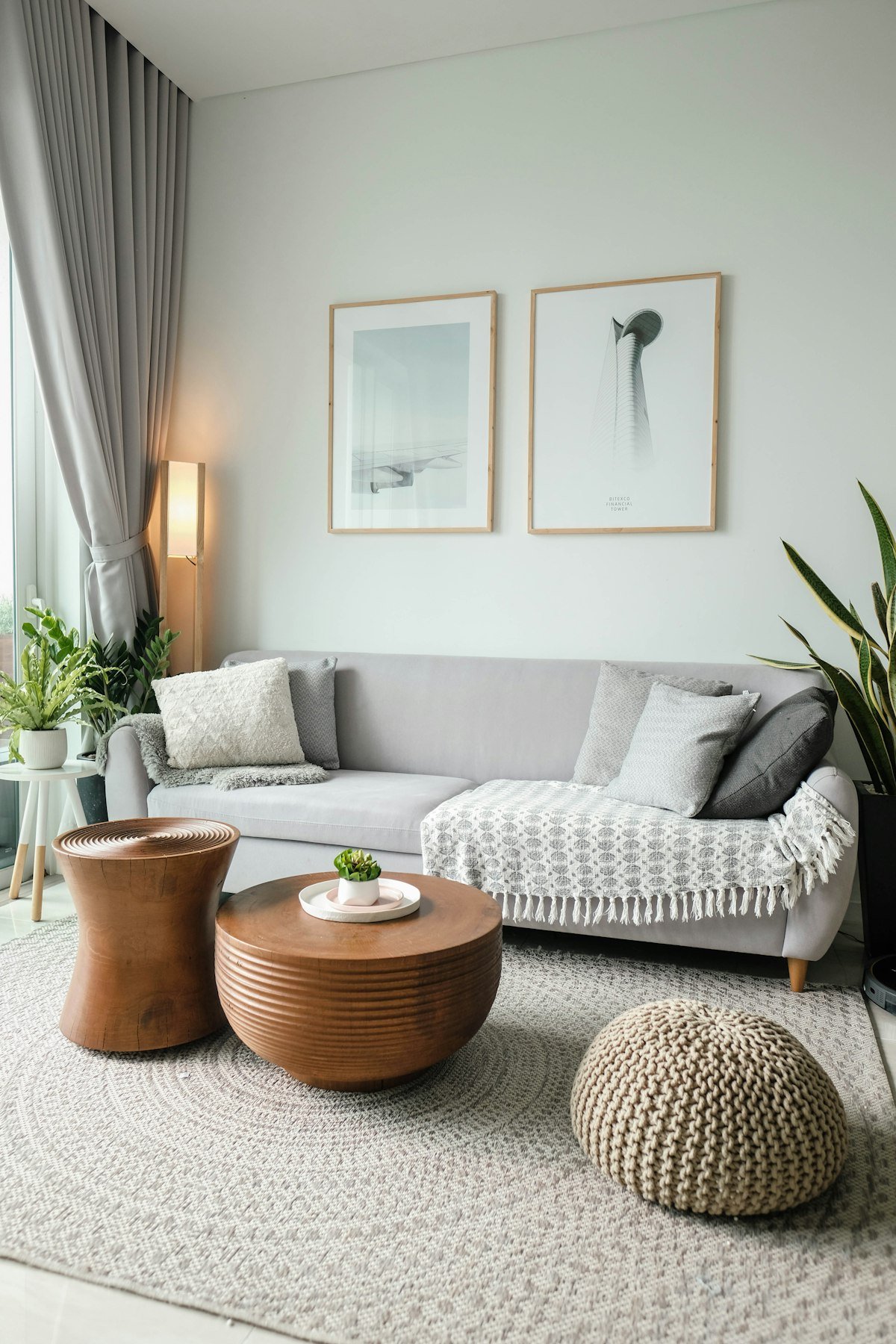
A small rug floating in the middle of the floor visually chops the room into fragments — and every fragment looks small. Size up until at least the front legs of every piece of furniture sit on the rug. Why it works: one continuous surface tricks the eye into reading the whole area as a single, larger zone. An 8×10 from budget stores like Target or Rugs.com often costs less than the “safe” 5×7 you were eyeing at a fancier shop.
3. Protect the Walkway
Stand at your living room door and look at the path to the sofa. If you have to zigzag around a coffee table corner or squeeze past a chair, the room feels cramped no matter how it’s decorated. Keep one clear, straight walking line through the room. Why it works: your brain judges a room’s size partly by how easily you can move through it.
4. Think in Vertical Space
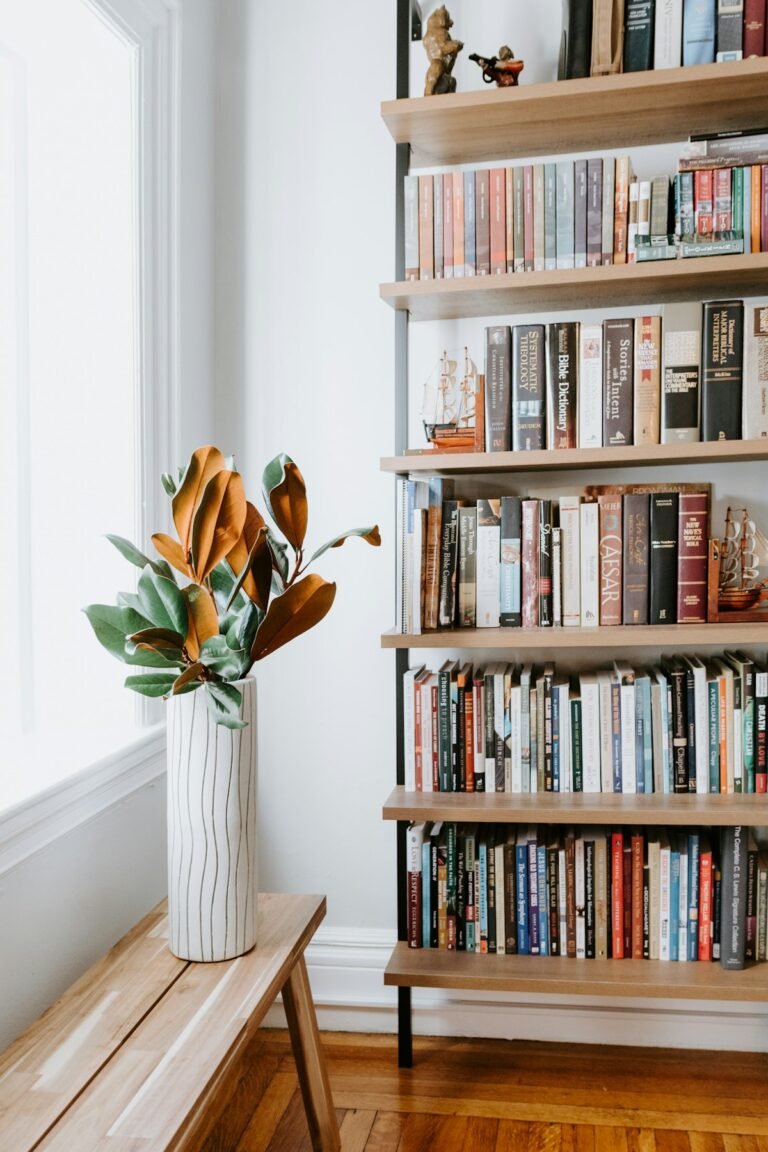
When floor space runs out, the walls are just getting started. Tall bookcases, floating shelves stacked high, art hung in a vertical column. Why it works: pulling the eye upward makes ceilings feel higher, and height is the dimension small rooms usually have to spare. A $40 tall shelf holds what three squat cabinets would.
Color and Light (Where the Magic Multiplies)
5. Paint It Light — and Warm
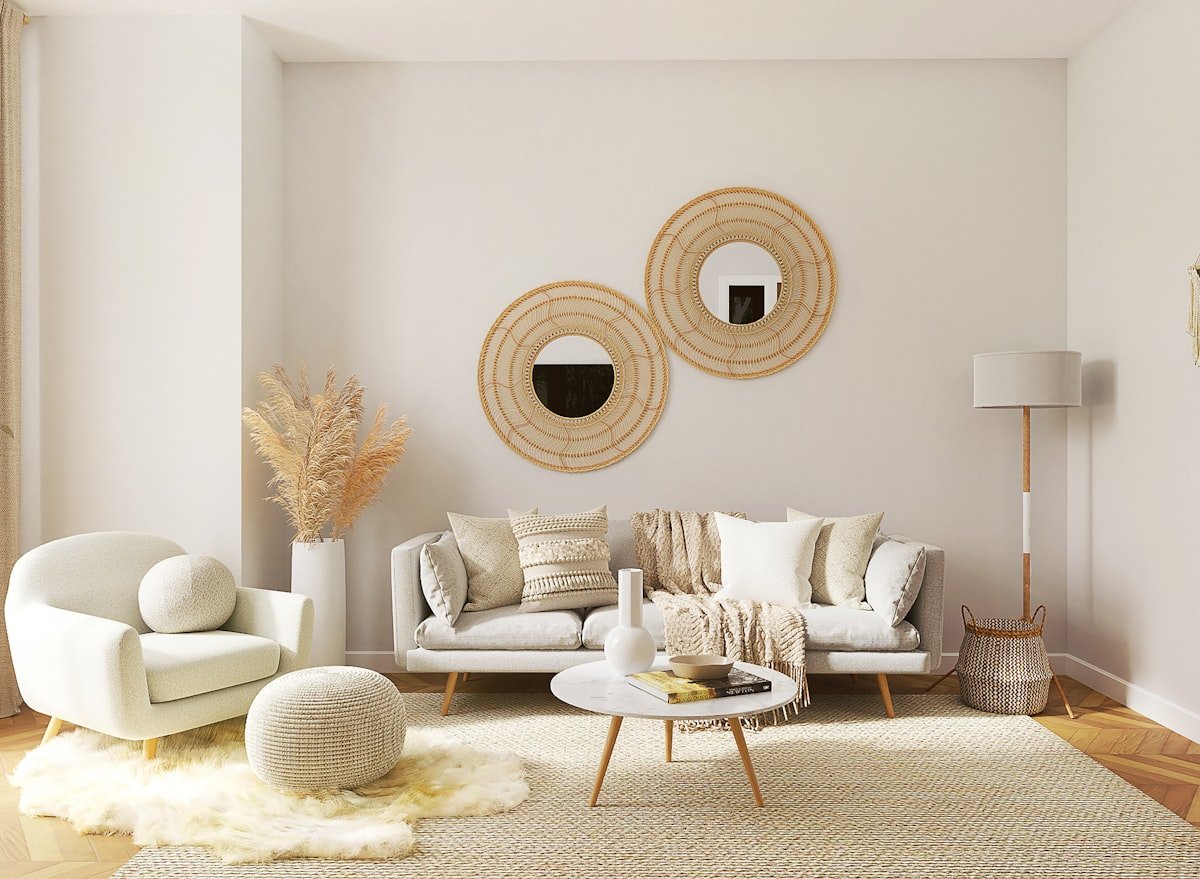
Light walls reflect light instead of absorbing it, which is why nearly every small-space designer starts with paint. But go warm (cream, ivory, soft greige) rather than stark white, which can feel cold and rental-flat. Why it works: more reflected light means fewer shadows, and shadows are what make corners feel close. Renters: check your lease — many allow painting if you return it neutral, and peel-and-stick wallpaper works for accent moments.
6. Hang a Mirror Opposite the Window
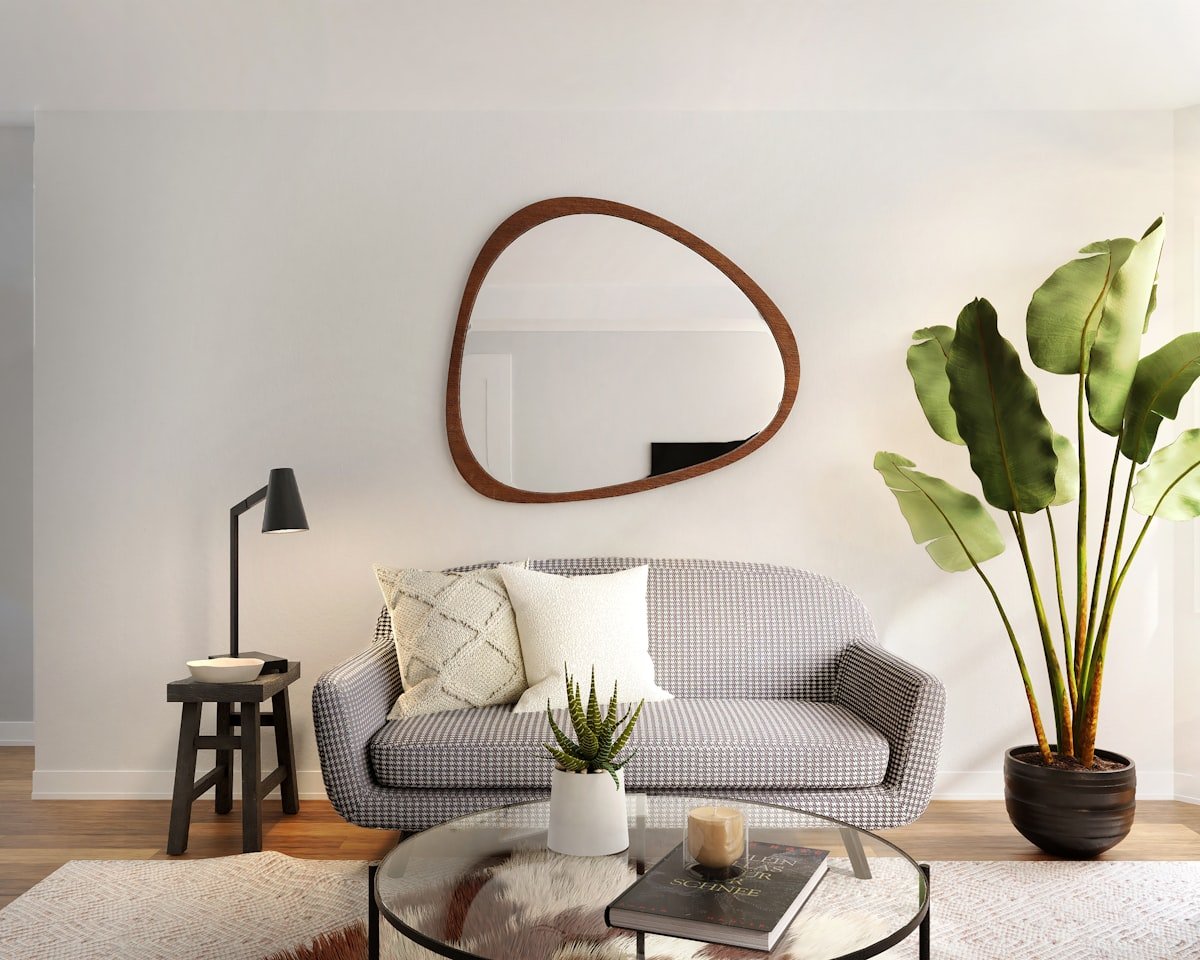
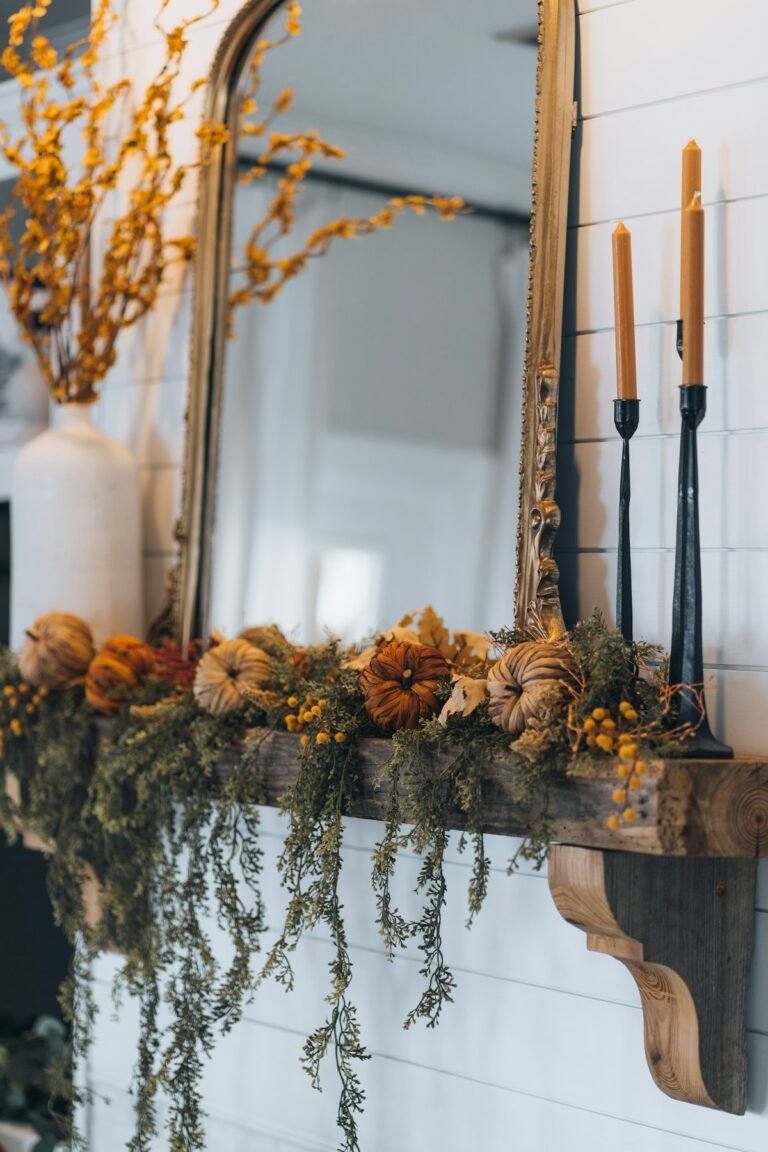
The oldest trick in the book because it’s the best one. A large mirror placed across from (or beside) a window effectively doubles the window. Why it works: mirrors bounce daylight into dark corners AND create the illusion of another opening in the wall — your eye reads it as more room. Thrift stores are full of big mirrors under $25; a coat of paint on the frame makes any of them work.
7. Three Points of Light
One overhead light flattens a room and pools shadows in the corners — and shadowed corners visually shrink the room. Aim for three light sources at different heights: a floor lamp, a table lamp, maybe a small lamp on a shelf. Why it works: evenly lit corners push the room’s visual boundaries outward. Warm bulbs (2700K) make it cozy instead of clinical.
8. Hang Curtains High and Wide
Mount the curtain rod close to the ceiling — not the top of the window frame — and extend it 8–12 inches past the window on each side. Why it works: floor-to-ceiling fabric makes windows look grand and ceilings look tall, and pushing the curtains wide lets the full window show, maximizing daylight. Same curtains, completely different room.
Furniture Choices (Buy Once, Buy Right)
9. Choose Furniture With Legs
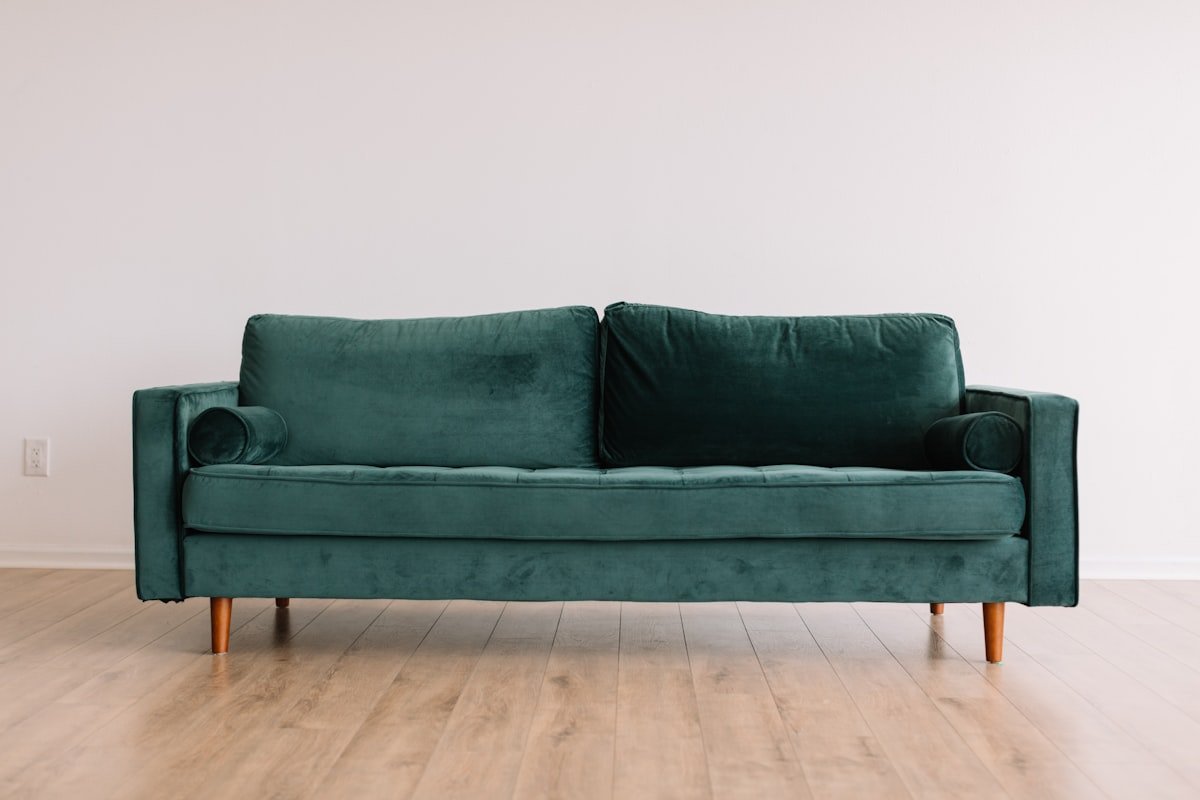
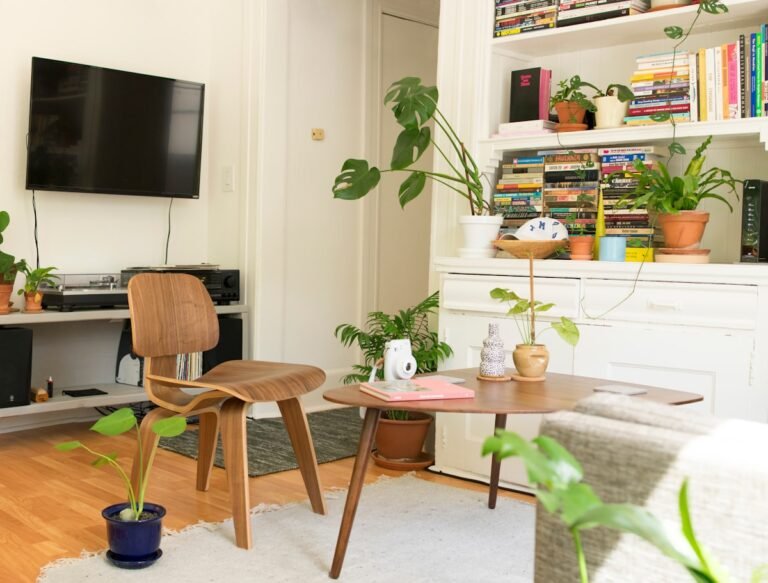
A sofa that sits flush on the floor is a visual brick. A sofa on slim, exposed legs — mid-century style — lets light and sightlines pass underneath. Why it works: every square inch of visible floor tells your brain “there’s more room here.” This applies to chairs, media consoles, and side tables too. It’s the single best filter to apply when you’re furniture shopping for a small space.
10. Make Every Piece Do Two Jobs
In a small room, single-purpose furniture is a luxury you can’t afford. A storage ottoman is a coffee table, a footrest, AND a blanket chest. Nesting tables are one table until guests arrive, then three. A bench under the window is seating plus boot storage. Why it works: every double-duty piece replaces a second piece you now don’t need — that’s whole square feet given back.
11. Right-Size the Sofa
The giant sectional you loved in the showroom will eat a small living room alive. A loveseat or apartment-size sofa (around 72–78 inches) plus one or two armchairs seats the same number of people while leaving the room breathable. Why it works: scale is relative — a room looks big when the furniture in it fits with margin, and cramped when one piece dominates.
12. The See-Through Coffee Table
A glass or acrylic coffee table does its job and then visually disappears. Why it works: transparent pieces take up physical space but almost no visual space — your eye travels straight through to the rug. If glass feels too fragile for your household, a slim-profile wood table with (you guessed it) leggy legs is the next best thing.
Styling (The Finishing Layer)
13. Fewer, Bigger Decor Pieces
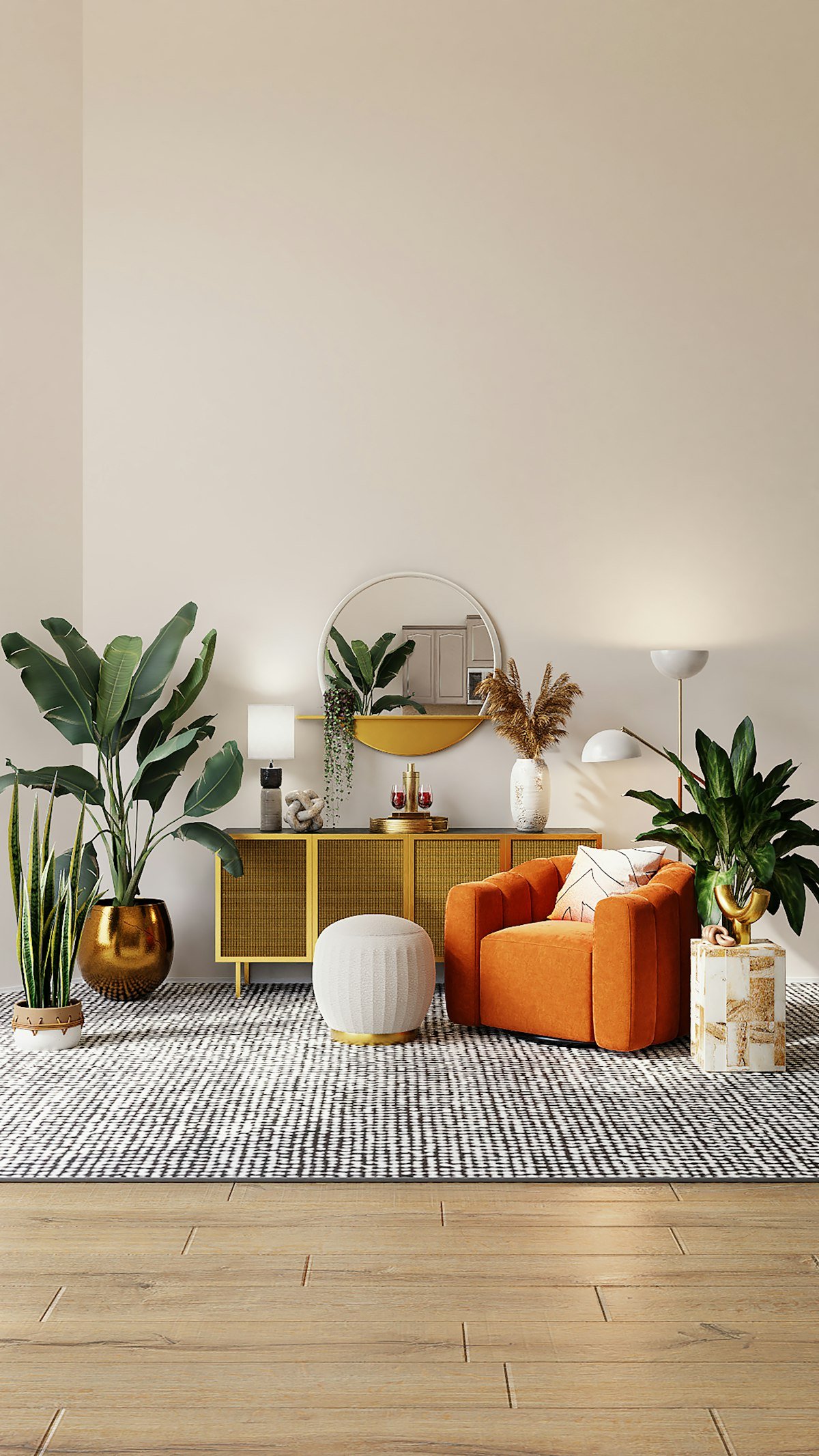
Ten small frames, six tiny vases, and a shelf of knickknacks read as visual noise — and noise shrinks a room. Swap them for one large piece of art, one substantial vase, a couple of oversized books. Why it works: fewer, larger objects give the eye places to rest, and calm reads as spacious. This is the cheapest “renovation” on this list: it’s just subtraction.
14. Beautiful Boxes and Baskets
Clutter is the fastest way to make any room feel small, and living rooms collect it: remotes, chargers, kids’ toys, the blanket pile. Give every category a lidded box or woven basket that looks good sitting out. Why it works: the stuff still lives in the room — it just stops shouting. Two baskets and ten minutes turn “messy small room” into “cozy styled room.”
15. One Big Plant (Not Ten Little Ones)
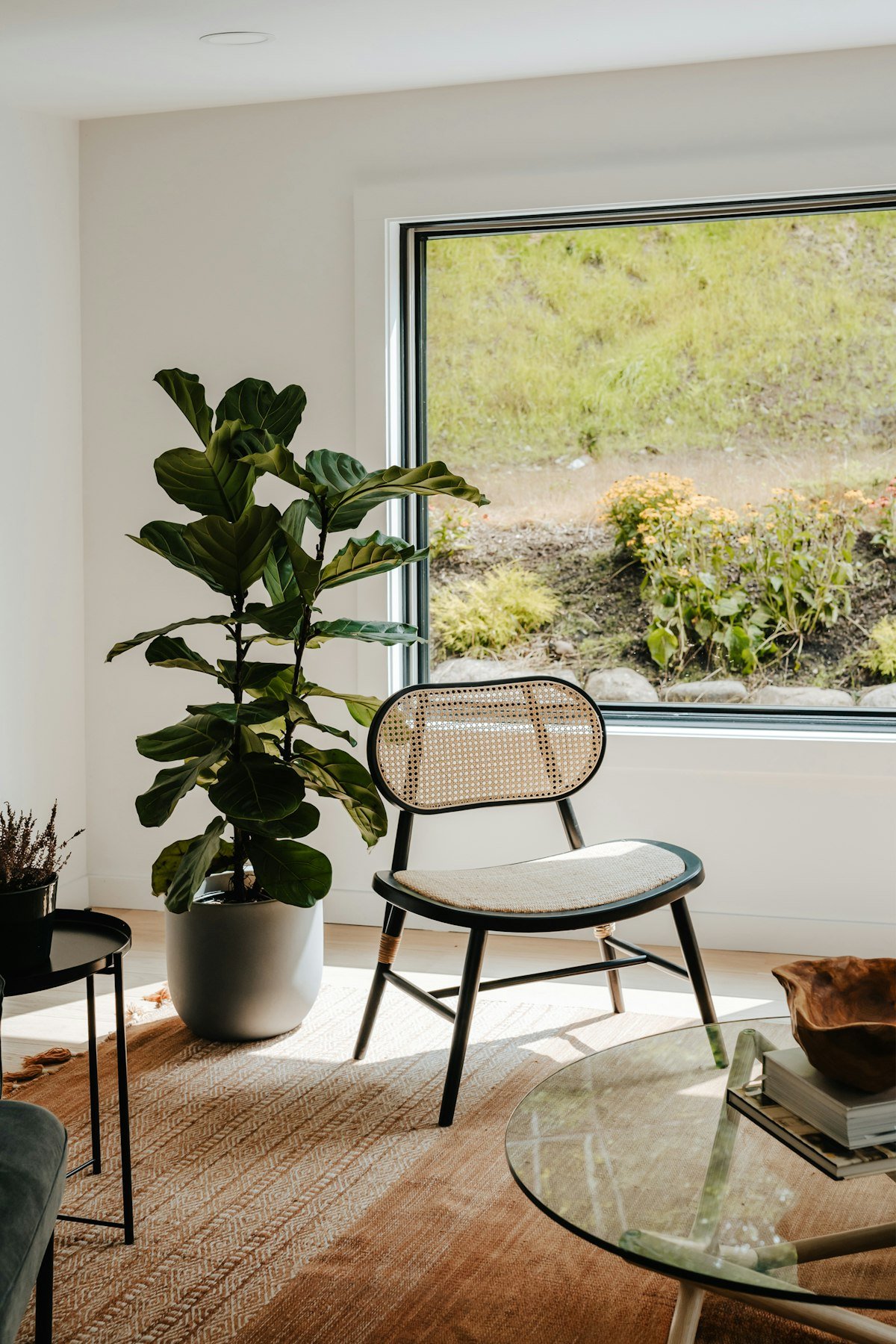
A single tall plant — a fiddle leaf fig, a rubber plant, even a good faux one from Target — adds life, height, and softness in one move. Why it works: it pulls the eye upward (see idea 4), fills an awkward corner beautifully, and one strong vertical element reads far calmer than a scattered jungle of little pots.
Start With the Free Ones
Tonight, before you buy anything: float the sofa, straighten the walking path, and move a mirror opposite the window. Those three cost nothing and you’ll feel the difference immediately — then let the bigger upgrades happen one paycheck at a time. Small living room ideas work best in layers, not in one exhausting weekend. If your storage situation is the real enemy, my small closet organization ideas use the same renter-friendly thinking — and there’s more room-by-room inspiration in Home Decor.